Natural Stone Driveways in Derby (Who Actually Call You Back)
Real stone that ages well, laid on a base built to carry it.
✔ Free estimates
✔ On-site from start to finish
✔ Priority warranty scheduling
Open Monday to Saturday, 8am-6pm
Get Your Free Fence Estimate
Natural Stone for Derby Drives
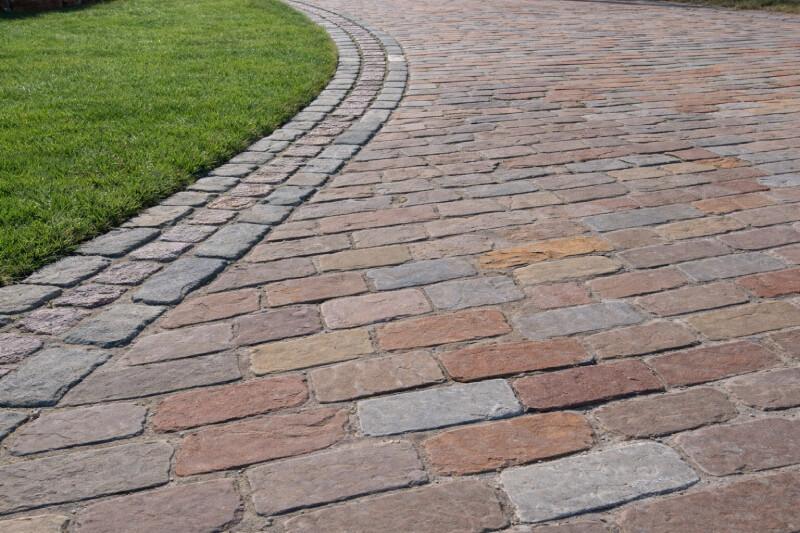
Get a drive in real stone that keeps its character for decades. Granite and sandstone setts and slabs weather gently, so the drive looks settled and not worn.
At Derby Driveways Direct we lay natural stone for homes in Allestree, Mickleover, Alvaston, Spondon and across Derby, and we work in Derbyshire, Nottinghamshire and Leicestershire too. We build the base, lay the stone and finish the joints.
Why Stone Drives Move and Stain
You pay more for stone, so you want it to stay flat. It does when the base is deep and the joints are right. A thin base lets setts rock and slabs crack under the wheels.
Open joints fill with weeds, and light stone takes up oil and dirt. A drive that cost more than the rest of the front garden then looks neglected.
Settle it at the start and the drive is laid once. We build a compacted base, bed the stone evenly, fill the joints and seal light stone where it helps.
Why Choose Natural Stone
A surface that outlasts the rest
You get a drive that can last for decades. Granite is dense and resists frost, and many old stone streets are still in daily use.
Character no two drives share
Your drive has colour and texture that vary from stone to stone. Setts, cobbles and slabs can be mixed, so you can frame a path or mark an entrance.
Repairs that blend
You can lift a single stone and relay it. The repair sits in the same material and does not show as a patch.
Grip underfoot
A riven or textured finish gives your boots and tyres purchase in the wet. We talk through the finish at the visit, because smooth stone can be slippery.
Services That Go With Natural Stone
Natural Stone on Derby’s Red Clay
Ground decides how long a stone drive stays flat. Much of Derby sits on red, clay-rich ground that the British Geological Survey maps as Mercia Mudstone. Clay-rich ground like this can shrink in dry spells and swell when it is wet.
Stone is heavy and rigid, so it shows movement in the ground quickly. A base sized to your ground and compacted in layers keeps each stone seated, and an even bedding layer stops rocking.
Clay also drains slowly, so rain needs a planned way out. That can be permeable joints or a fall to a drain or a border, and we agree it with you before the first stone goes down.
What Happens After You Get In Touch
Three steps, in this order. You know what comes next at every stage.
- You get in touch. Send the short form or call. We can call you back and ask a few questions first, so we know where the drive is and what you want on it. Estimates are always free.
- We visit. We prefer to come over to you to see the job, because measurements, levels, drainage and access are visible on site. You choose the stone, the pattern and the joints, and your quote follows after the visit.
- We build, you approve. Work starts when you approve the plan. The ground is dug to depth, the base is compacted, the stone is bedded and laid, and the joints are filled. We tidy the work area when we finish.
What a Natural Stone Drive Includes
Levels and falls. Heights and falls are set out first, so rain runs off the surface and away from the house.
Dig and sub-base. The old surface comes out where needed and the ground is dug to the depth your drive needs. The sub-base goes in and is compacted in layers.
Bedding layer. A levelled bedding layer gives each stone an even seat.
Laying and cutting. Setts or slabs are laid in your pattern and cut to fit at the edges.
Joints and sealing. Joints are filled to suit the drainage plan. Lighter stone is sealed, so oil and dirt wash off more easily.
Choosing Your Stone
Stone type and format decide how the drive looks, how it grips and how it ages.
Granite setts. Very dense, with low water uptake and strong frost resistance. A good fit for drives that take daily traffic.
Sandstone setts and slabs. Warmer tones and a softer look. Sandstone takes up a little more water than granite, so sealing and good drainage matter more.
Cobbles and setts. Small units give a traditional look and follow curves well.
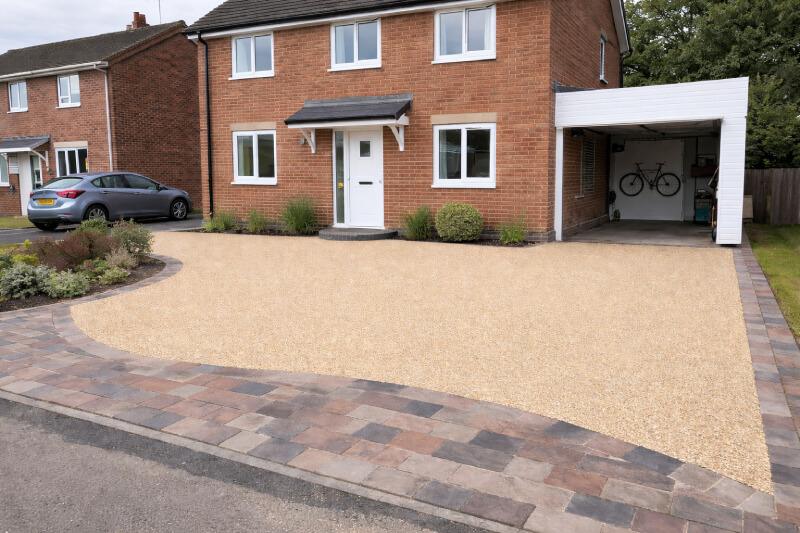
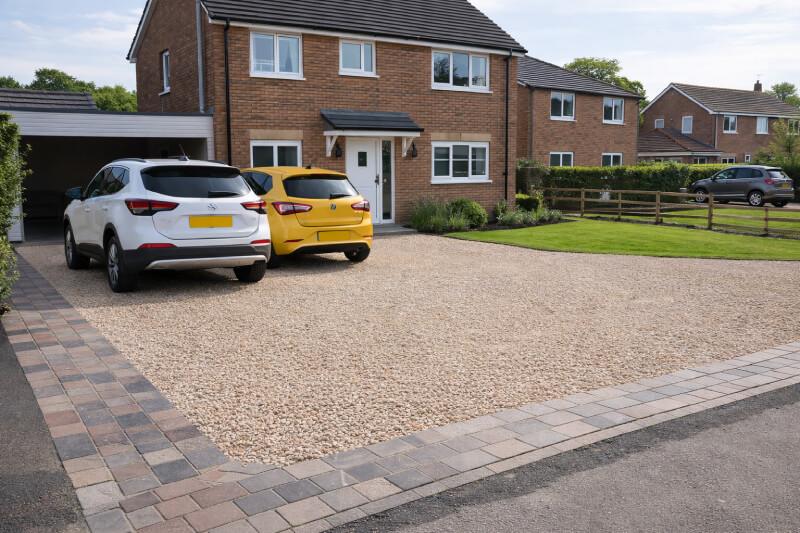
Borders and tracks. Setts can frame the drive or form two wheel tracks with gravel between them.
Base, Stone and Joints That Hold
A stone drive is only as good as the layers under it. At Derby Driveways Direct we choose each layer for the job.
Sub-base.
It carries the weight of the cars, so it is sized to your ground and compacted in layers.
Bedding layer.
A levelled layer under the stone gives each one an even seat, so nothing rocks.
Stone.
Rated for vehicles and chosen in the type, colour and pattern you picked.
Joints.
They hold the stones together and set how water leaves the surface.
Edge restraint.
It holds the outer stones in place, so the pattern does not creep at the sides.
Rules to Know Before You Lay Stone
Know the rules before you lay and the drive goes down once. Derby City Council is the planning authority for Derby, and the Planning Portal sets the national rules for front gardens.
Your joints decide the planning position. More than 5 square metres of a solid surface in a front garden needs planning permission, unless rain drains to a lawn or border. Stone laid with permeable joints lets water through, and a permeable surface needs no permission at any size. Stone laid with solid joints is a solid surface. We settle the joint type with you before we order the stone.
A free utility search. LSBUD runs a free search that shows underground pipes and cables near your property. Not every asset owner is a member, so treat a search as a good start and tell us about anything you know is buried.
Your address decides the council. Derby City Council covers the city. A drive in Derbyshire, Nottinghamshire or Leicestershire falls under a different council, so the first question is which council covers your address.
Natural Stone in Derby and the Areas Around It
You get the same visit whether your drive is in Allestree, Mickleover, Alvaston, Spondon or elsewhere in Derby. Tell us where the drive is, and the visit starts from there.
Looking After a Natural Stone Drive
Stone stays handsome with a few small habits. Each one takes minutes.
Sweep it. Leaves and grit hold moisture and feed weeds in the joints.
Keep the joints filled. Top up the joint material where it washes out, so the stones stay locked.
Wash it gently. Use a low-pressure wash. A hard jet can blast out joint material.
Treat stains early. Oil and fuel are easier to lift from sealed stone, so wipe spills quickly.
Reseal light stone. A fresh coat keeps lighter sandstone easier to clean.
What Moves the Price of a Natural Stone Drive
Size sets most of the price. After that it comes down to the stone itself, the pattern, how deep the ground has to be dug and what has to come out first. Access matters too: how easily pallets of stone and a digger can reach the drive.
Estimates are always free. We prefer to come over to you to see the job, because measurements, levels, drainage and access are visible on site. Your quote follows after the visit.
Ask which stone is used and what sits under it. Stone type and base depth explain most differences between quotes. Read more on the pricing page.
Natural Stone Against Other Drive Surfaces
| What matters | Natural stone | Block paving | Tarmac | Gravel |
|---|---|---|---|---|
| How it is made | Setts or slabs bedded on a compacted base | Blocks on a bedding layer, locked by joint sand | Hot layers rolled over a compacted base | Loose stone over a membrane and a compacted base |
| Look | Real stone with natural variation | Many colours and patterns | Black, with few colour options | Loose stone in many tones |
| Repairs | Lift and relay single stones | Lift and relay single blocks | Patch the damaged area | Rake and top up |
| Water | Depends on the joints | Can be built permeable | Usually solid, so water needs a fall to a drain | Drains through the stone |
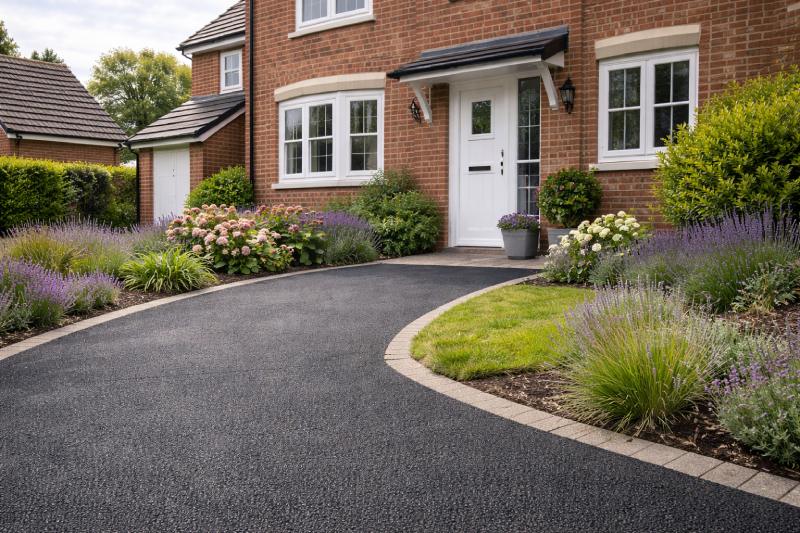
Pick natural stone if you want real material that ages well. Compare block paving, tarmac and gravel drives, or add patios and paths in matching stone.
Other Driveway Surfaces We Lay
Driveway Surfaces
FAQs
Do I need planning permission for a natural stone drive in Derby?
It depends on the joints. A solid surface over 5 square metres in a front garden needs permission unless rain drains to a lawn or border. A permeable surface needs none at any size. Derby City Council is the planning authority in Derby.
Granite or sandstone for a drive?
Granite is denser and takes up less water, so it handles frost and daily traffic well. Sandstone has a warmer look and takes up a little more water, so sealing and drainage matter more.
Can a stone drive be repaired?
Yes. Single stones can be lifted and relaid. A sunken area usually points to the base, so the stones are lifted, the base is fixed and the stones go back down.
Is stone slippery when wet?
It can be, depending on the finish. Riven and textured stone grips better than smooth stone, so we choose the finish with you at the visit.
Do you work outside Derby?
Yes. We work in Derbyshire, Nottinghamshire and Leicestershire. The council that covers your address sets the rules, so the visit starts with where the drive is.
See the Job Before You Decide
We visit to see the job. We look at the levels, the drainage and the access, and talk through the stone, the pattern and the joints with you. Your estimate is free, and your quote follows after the visit.